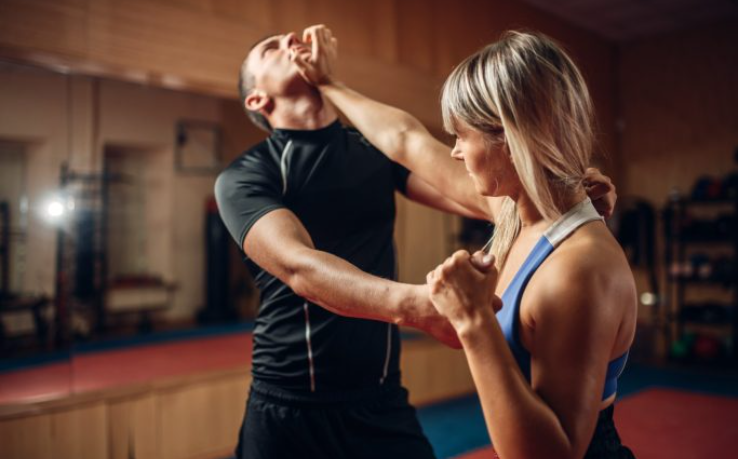

Self-defense training is often associated with punches, kicks, and complicated techniques. However, a truly practical class should teach much more than physical movements. Beginners need skills that help them recognize potential problems, stay calm, communicate clearly, create distance, and move toward safety.
The best self defense lessons are usually structured around realistic situations rather than flashy techniques. Beginners should gradually learn how to make safer decisions, respond under pressure, and use simple movements responsibly. The goal is not to turn every student into a fighter. It is to help people become more aware, confident, and prepared.
What Makes Self-Defense Training Practical?
A practical self-defense class should teach skills that beginners can understand, practice, and remember.
A useful program generally focuses on:
- Awareness
- Verbal communication
- Personal boundaries
- Balance and movement
- Distance management
- Basic escape skills
- Controlled physical responses
Training should also be progressive. Beginners should not be expected to perform advanced techniques during their first class. They need time to develop coordination, confidence, and physical control.
1. Situational Awareness
Awareness should be one of the first skills beginners learn.
Situational awareness means paying reasonable attention to what is happening around you. It does not mean being afraid of everyone or constantly expecting something bad to happen.
A beginner can practice noticing:
- People and activity around them
- Available exits
- Changes in the environment
- Unusual or escalating behavior
- Places where they can seek assistance
- Whether a situation is becoming uncomfortable
For example, someone walking through an unfamiliar area can remain aware of their surroundings instead of becoming completely distracted by a phone.
Awareness gives a person more time to make a decision before a situation becomes more serious.
2. Verbal Boundaries and Communication
Physical techniques should not be the first response to every uncomfortable situation.
Clear communication can sometimes prevent a situation from escalating.
Beginners can practice using short, confident statements such as:
- “Stop.”
- “Please move back.”
- “Don’t touch me.”
- “I don’t want any trouble.”
- “Leave me alone.”
- “I need help.”
The purpose of practicing these phrases is not to encourage confrontation. It is to help students communicate boundaries clearly when necessary.
Voice, posture, and confidence can all play a role in effective communication.
3. Balance and Footwork
Physical self-defense becomes much harder if a person cannot maintain balance or move effectively.
That is why practical self defense lessons should include basic footwork.
Beginners can learn how to:
- Maintain a stable stance
- Move forward and backward safely
- Change direction
- Maintain appropriate distance
- Recover their balance
- Move without crossing their feet unnecessarily
Good footwork provides a foundation for both defensive and general athletic movement.
It can also help beginners feel more comfortable with their bodies as they become familiar with martial arts training.
4. Managing Distance
Distance is an important part of personal safety.
A person needs to understand how close another individual is and how quickly that distance can change.
Training can introduce basic concepts such as:
- Maintaining personal space
- Moving away from a potential threat
- Positioning yourself near an exit
- Avoiding being trapped against a wall or object
- Creating space when someone moves closer
Beginners do not need complicated theories to understand these concepts.
Simple partner drills can help students recognize how movement and distance affect their ability to respond.
5. Simple Escape and Disengagement Skills
A practical class should teach beginners how to get away from common forms of unwanted contact.
Depending on the program and instructor, students may practice controlled exercises involving basic grabs or restricted movement.
The emphasis should be on creating an opportunity to disengage rather than trying to overpower another person.
Beginners can learn principles such as:
- Protecting their balance
- Creating space
- Moving toward a safer direction
- Releasing from simple holds
- Getting away when an opportunity appears
- Seeking assistance after reaching safety
These skills should always be practiced under qualified supervision.
6. Staying Calm Under Pressure
Knowing a technique is one thing. Being able to think clearly when nervous is another.
This is why practical training should gradually introduce controlled pressure.
A beginner may first practice a movement slowly. Once they understand it, the instructor can introduce slightly more realistic movement or partner resistance.
This progression helps students become familiar with performing basic skills while concentrating.
Good training should not intentionally create unnecessary fear. Instead, it should help students become more comfortable managing stress.
7. Knowing When to Leave
One of the most important self-defense skills is knowing when not to fight.
If a situation can safely be avoided, leaving may be the best option.
Beginners should understand that self-defense can include:
- Walking away
- Moving toward other people
- Finding a trusted adult
- Contacting security or emergency services when appropriate
- Leaving an argument
- Avoiding unnecessary confrontation
- Getting to a safer location
Physical skills should generally support the goal of reaching safety, not winning a confrontation.
Why Simple Techniques Matter
A beginner does not need to memorize dozens of complicated movements.
When people are nervous, remembering a long sequence can become difficult. Practical programs therefore often emphasize straightforward movements that can be practiced repeatedly.
Repetition helps students become familiar with:
- Body positioning
- Balance
- Movement
- Protective posture
- Basic defensive responses
- Creating distance
The goal is to build reliable foundations before introducing more advanced material.
Self-Defense Should Include Realistic Practice
Demonstrating a technique once is not enough.
Students need opportunities to practice under controlled conditions.
A responsible class may use simple scenarios that allow beginners to think about what they would do in different situations.
For example, an instructor might create a scenario involving:
- Someone entering personal space
- A verbal confrontation
- An attempted grab
- Being pushed off balance
- Needing to move toward an exit
The scenario should remain controlled and appropriate to the student’s experience.
Afterward, instructors can explain what worked and what could be improved.
Confidence Is Part of Practical Training
A good self-defense class should help beginners become more confident without encouraging arrogance.
Confidence can mean:
- Speaking clearly
- Maintaining composure
- Understanding personal boundaries
- Moving with better control
- Knowing when to ask for help
- Feeling capable of learning new skills
Students should not leave class believing they are invincible.
Instead, they should understand their abilities while also recognizing the importance of prevention and good judgment.
Physical Fitness Supports Self-Defense
Self-defense training can also improve general physical abilities.
Depending on the class, beginners may work on:
- Strength
- Flexibility
- Coordination
- Balance
- Agility
- Stamina
- Mobility
Better physical control can make movement more efficient and help students feel more comfortable during training.
However, students do not need to be extremely fit before beginning. A beginner-friendly program should allow fitness to develop gradually.
Look for a Structured Beginner Program
Not every self-defense class teaches the same way.
Before joining, beginners can consider whether the program provides:
- A clear curriculum
- Qualified instruction
- Controlled partner practice
- Appropriate safety equipment
- Progressive training
- Respectful communication
- Age-appropriate instruction
- Opportunities for questions and feedback
A good instructor should explain not only how a technique works but also when it should and should not be used.
Avoid Classes That Focus Only on Fighting
A class that spends every session teaching students how to attack may not provide a complete approach to personal safety.
Practical self-defense should include prevention and decision-making.
Beginners should learn that they can sometimes avoid a problem by:
- Recognizing warning signs
- Leaving early
- Setting boundaries
- Staying calm
- Asking for assistance
- Avoiding unnecessary arguments
Physical techniques have their place, but they are only one part of a broader safety strategy.
Practice Makes Skills More Familiar
Self-defense is not something that can be mastered in one session.
Consistent practice gives beginners opportunities to improve gradually.
Over time, they can become more comfortable with:
- Basic movement
- Verbal communication
- Balance
- Distance
- Defensive positioning
- Escape concepts
- Controlled partner exercises
Regular practice also allows instructors to identify mistakes and provide corrections.
Self-Defense Is Different From Competitive Martial Arts
Martial arts and self-defense can overlap, but their goals are not always identical.
Competitive martial arts may focus heavily on sport rules, scoring, competition strategy, and athletic performance.
Practical self-defense generally focuses more on awareness, avoidance, communication, movement, and getting away from dangerous situations.
This does not mean one approach is automatically better. It simply means beginners should choose training based on what they want to learn.
Choose Training That Matches Your Needs
The right class can depend on the student’s age, goals, fitness level, and experience.
Someone interested mainly in personal safety may want a program emphasizing awareness and practical scenarios.
Another person may prefer martial arts training that combines self-defense with fitness, discipline, and competition.
Before enrolling, it can help to attend an introductory session and see whether the teaching style feels appropriate.
Common Mistakes Beginners Should Avoid
New students sometimes expect self-defense training to make them immediately capable of handling any situation.
That is unrealistic.
Beginners should avoid:
- Trying complicated techniques without supervision
- Practicing dangerous movements on friends
- Looking for opportunities to test their skills
- Assuming training makes them invulnerable
- Ignoring avoidance and awareness
- Treating every disagreement as a physical threat
The purpose of training is preparation, not confrontation.
The Importance of Responsible Instruction
An instructor has an important role in shaping how students understand self-defense.
Responsible instruction should make it clear that physical skills come with responsibility.
Students should learn to respect:
- Training partners
- Personal boundaries
- Class rules
- Different ability levels
- The seriousness of physical force
This creates an environment where students can develop useful skills without developing an unnecessarily aggressive mindset.
How Beginners Can Get the Most From Self-Defense Lessons
Students can improve their experience by approaching training with patience.
Focus on understanding the basics rather than trying to learn everything immediately.
Ask questions when something is unclear, listen to corrections, and practice consistently.
It can also help to pay attention to the decision-making side of each exercise. Ask yourself:
“Could I avoid this situation?”
“Where could I move?”
“Who could I ask for help?”
“What would allow me to leave safely?”
These questions reinforce the practical purpose behind the physical training.
Conclusion
A practical self-defense class should teach much more than punches and kicks. The most useful self defense lessons help beginners develop awareness, communication, balance, distance management, escape skills, composure, and good decision-making.
The seven skills covered here—situational awareness, verbal boundaries, footwork, distance management, escape and disengagement, staying calm, and knowing when to leave—create a strong foundation for beginners.
Physical techniques can be valuable, but personal safety begins with recognizing problems early and making sensible choices. A supportive, well-structured training program can help beginners become more confident and prepared while keeping the focus on prevention, responsibility, and reaching safety.