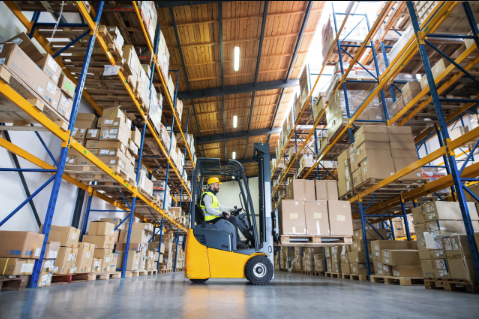

Warehouses are evolving rapidly. Automation, real-time tracking systems, and data-driven inventory management have transformed distribution centers into high-efficiency environments. As facilities become more connected and productivity expectations increase, equipment reliability becomes even more critical.
Forklifts remain essential in these environments, especially in operations that depend on internal combustion units for heavy lifting and extended runtime. Within these machines, the forklift radiator plays a central role in maintaining consistent engine temperature during long operating cycles. In smart warehouses where downtime disrupts tightly coordinated workflows, cooling system performance is no longer just a maintenance concern—it is an operational priority.
Understanding how radiator technology is adapting to these environments offers insight into the future of material handling reliability.
Integration with Data-Driven Maintenance Systems
Modern warehouses rely heavily on digital monitoring tools to manage equipment health. Radiator systems are gradually being incorporated into predictive maintenance frameworks.
Rather than responding only to overheating events, advanced cooling systems now support:
- Temperature monitoring integration
- Performance data logging
- Automated alert systems
When forklift radiators are paired with telematics platforms, warehouse managers can identify patterns in temperature fluctuation before mechanical stress leads to failure.
This shift from reactive repair to data-guided maintenance aligns with broader smart warehouse strategies.
Improved Heat Exchange Efficiency
As warehouse operations demand longer operating hours, radiator efficiency becomes more significant. Enhanced core designs, improved fin configurations, and optimized airflow channels allow modern forklift radiator systems to dissipate heat more effectively.
Efficiency improvements contribute to:
- Reduced engine strain
- Lower fuel consumption
- More stable operating temperatures
The Society of Automotive Engineers emphasizes thermal management as a foundational element of heavy-duty equipment performance. Advances in radiator construction reflect that priority.
In smart facilities where equipment cycles are continuous, even small improvements in thermal efficiency support operational stability.
See also: Revolutionizing Sleep with Modern Technology
Durability in Demanding Environments
Warehouses expose forklifts to dust, debris, and constant movement between indoor and outdoor areas. Radiator technology has adapted to these conditions through reinforced materials and enhanced protective designs.
Modern forklift radiator construction often includes:
- Strengthened core supports
- Corrosion-resistant coatings
- Debris-resistant fin structures
Durability enhancements reduce the frequency of unexpected breakdowns in high-traffic distribution centers.
As facilities increase automation in inventory handling, human intervention becomes more targeted. Reliable cooling systems reduce the need for emergency maintenance interruptions.
Compatibility with Hybrid and Alternative Fuel Systems
The material handling industry is gradually incorporating hybrid and alternative fuel technologies. While electric forklifts eliminate the need for traditional radiators, hybrid combustion systems still depend on efficient cooling components.
Future forklift radiator systems may support:
- Integrated cooling modules
- Adaptive temperature control
- Multi-system compatibility
As warehouse fleets diversify, cooling components must adapt to evolving engine architectures.
Airflow Optimization in Climate-Controlled Warehouses
Many smart warehouses operate in climate-controlled environments to protect sensitive inventory. Controlled airflow and temperature consistency are central to facility design.
Radiator systems must perform efficiently without disrupting environmental balance. Improved airflow management ensures that cooling systems operate effectively while minimizing heat release into the surrounding workspace.
Enhanced radiator engineering supports this balance by directing thermal output more precisely.
Predictive Maintenance and Lifecycle Planning
Advanced forklift radiator technology increasingly contributes to lifecycle analytics. Smart systems provide data on operating temperatures, runtime hours, and environmental exposure.
These insights help managers:
- Schedule preventive service
- Replace components before failure
- Optimize fleet longevity
Warehouses that integrate radiator health into broader asset management strategies improve overall uptime.
Searching for quality forklift radiator components through trusted sources such as forklift radiator suppliers supports proactive replacement planning.
Sustainability and Energy Considerations
Efficiency improvements in cooling systems contribute to sustainability goals. Lower engine strain and optimized heat exchange reduce fuel consumption and emissions in combustion-powered forklifts.
As distribution centers pursue environmental performance benchmarks, equipment efficiency becomes part of the sustainability equation.
Radiator innovation supports:
- Reduced energy waste
- Extended equipment lifespan
- Lower operational emissions
Cooling systems, while often overlooked, play a meaningful role in environmental performance metrics.
Conclusion
The forklift radiator is evolving alongside the smart warehouse ecosystem. Integration with monitoring systems, enhanced durability, improved heat exchange efficiency, and compatibility with modern powertrains position radiator technology as a key component in future-ready facilities.
Warehouse operators focused on uptime, sustainability, and predictive maintenance benefit from evaluating high-quality cooling components such as those available through forklift radiator platforms.
As warehouses become more interconnected and performance-driven, reliable thermal management ensures that material handling equipment keeps pace with operational demands. In this environment, radiator technology is no longer just a supporting component—it is part of the infrastructure that sustains productivity.