
Life coaching is no longer limited to notebooks, spreadsheets, or scattered messages across emails and social platforms. As coaching practices grow, managing clients, sessions, progress, and communication becomes more complex. This is where CRM tools play a powerful role. A CRM for life coaches is not just a database, it is a system that helps coaches stay organized, deliver better experiences, and grow their practice with confidence.
Life coaching is deeply personal work, but the systems behind it must be structured and reliable. By using CRM tools, life coaches can focus less on administration and more on meaningful client transformation.
What Is a CRM for Life Coaches?
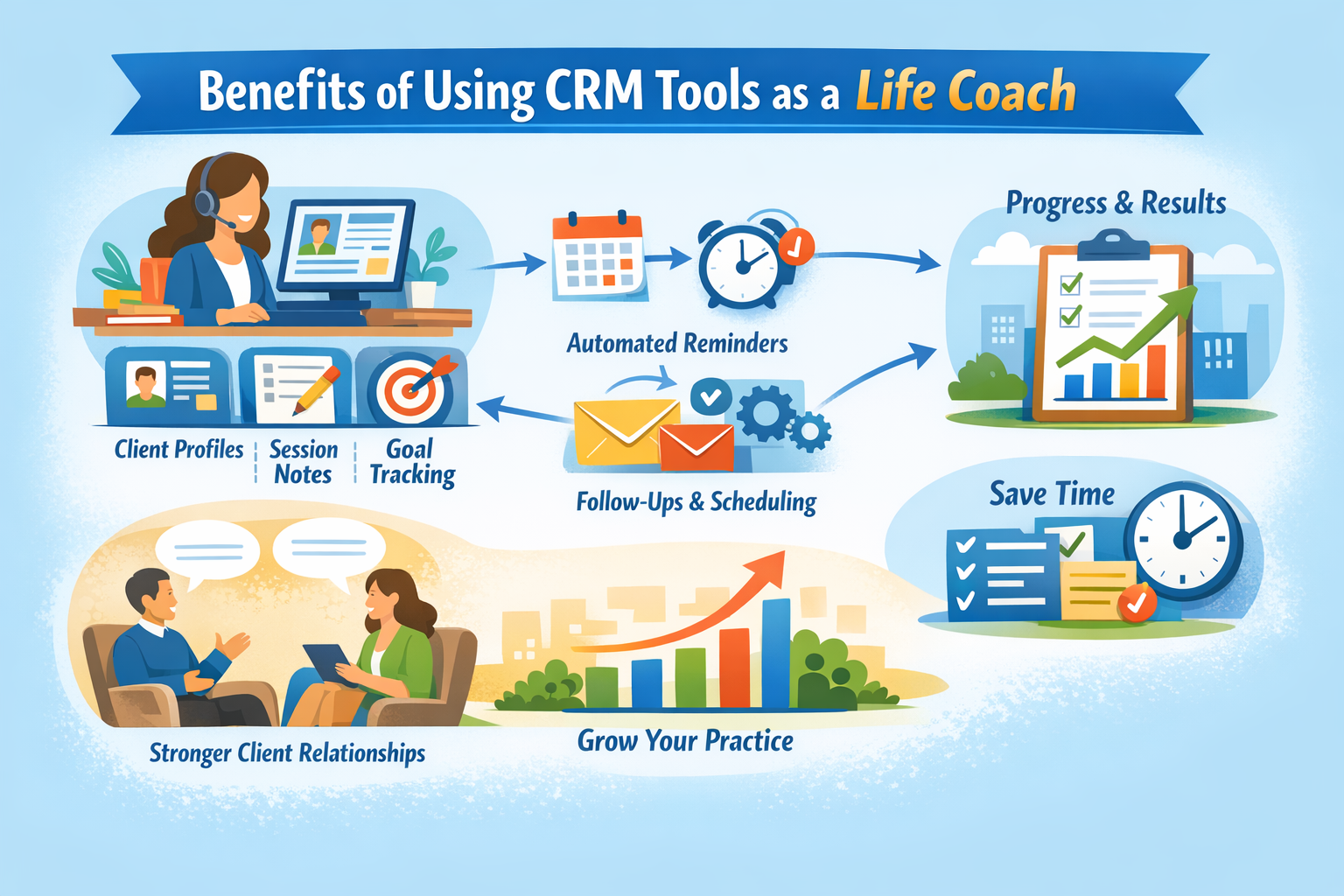
A CRM (Customer Relationship Management) tool is a centralized platform designed to manage relationships, communication, data, and workflows. For life coaches, a CRM is customized to handle coaching-specific needs such as client profiles, session notes, goals, reminders, progress tracking, and follow-ups.
Unlike generic tools, a CRM for life coaches supports the entire coaching journey—from onboarding a new client to tracking long-term outcomes—while maintaining professionalism and consistency.
Better Client Organization and Clarity
One of the biggest benefits of using CRM tools as a life coach is having all client information in one place. Instead of juggling emails, calendars, and documents, a CRM creates a single source of truth.
Coaches can easily store:
- Client background information
- Intake forms and assessments
- Coaching goals and milestones
- Session history and notes
- Communication logs
This level of organization ensures that no detail is lost. When a client joins a session, the coach has full context, allowing for more focused and impactful conversations. Over time, this clarity leads to stronger coaching relationships and better outcomes.
Improved Client Experience and Trust
Life coaching relies heavily on trust. Clients expect consistency, attention, and follow-through. CRM tools help coaches deliver on these expectations without stress.
Automated reminders, timely follow-ups, and personalized communication show clients that they are valued. When a client receives session reminders, goal check-ins, or thoughtful messages at the right time, it reinforces accountability and engagement.
A well-structured CRM for life coaches also reduces errors, such as missed sessions or forgotten follow-ups, which can negatively impact trust. The smoother the experience, the more confident clients feel in the coaching process.
Time Savings and Reduced Admin Work
Administrative tasks can consume a significant portion of a life coach’s day. Scheduling sessions, tracking payments, writing notes, and managing communication manually can be exhausting and inefficient.
CRM tools automate many of these repetitive tasks, including:
- Appointment scheduling
- Session reminders
- Client follow-ups
- Data updates
By reducing manual work, coaches reclaim valuable time. This time can be reinvested into client preparation, professional development, or expanding the coaching practice. Over the long term, efficiency directly supports sustainability and work-life balance.
See also: Boosting Your Business With Effective Bookkeeping 6623596809
Structured Goal Tracking and Progress Monitoring
Life coaching is results-driven. Clients want to see growth, change, and progress over time. CRM tools make it easier to track goals and measure outcomes in a structured way.
With a CRM for life coaches, goals can be documented, broken into milestones, and reviewed regularly. Coaches can track patterns, note breakthroughs, and identify challenges across sessions. This data-driven approach helps both the coach and the client stay aligned.
When clients can clearly see their progress, motivation increases. It also strengthens the perceived value of coaching, as outcomes become more tangible and visible.
Consistent Coaching Frameworks
Many life coaches develop their own frameworks, models, or methodologies. CRM tools allow these frameworks to be embedded into workflows, ensuring consistency across all clients.
Templates for session notes, onboarding processes, and follow-up messages help maintain a professional standard. This consistency is especially valuable for coaches working with multiple clients or offering different coaching programs.
Using a CRM ensures that every client receives a structured, intentional coaching experience regardless of how busy the practice becomes.
Stronger Client Accountability
Accountability is a core element of effective life coaching. CRM tools support accountability by tracking commitments, action steps, and deadlines.
When goals and actions are recorded and revisited, clients are more likely to follow through. Automated check-ins and reminders reinforce responsibility without the coach needing to manually chase updates.
A CRM for life coaches transforms accountability from an informal concept into a visible, trackable process that supports long-term success.
Easier Scaling and Practice Growth
As a coaching practice grows, complexity increases. Managing ten clients is very different from managing fifty or one hundred. CRM tools make scaling possible without sacrificing quality.
With centralized systems, coaches can:
- Manage larger client volumes
- Maintain consistent communication
- Analyze client engagement and retention
- Identify opportunities for new programs
Instead of feeling overwhelmed, coaches can grow with confidence, knowing their systems are designed to support expansion.
Data-Driven Insights for Better Decisions
CRM tools provide valuable insights that help life coaches make informed decisions. By analyzing client engagement, session frequency, and goal completion, coaches can identify what works best.
These insights can guide:
- Program improvements
- Coaching techniques
- Client retention strategies
- Pricing and service offerings
A CRM for life coaches turns everyday coaching activity into meaningful data that supports smarter business and coaching decisions.
Enhanced Professional Image
Using CRM tools elevates the overall professionalism of a life coaching practice. Organized communication, structured processes, and consistent follow-ups create a polished experience for clients.
This professionalism builds credibility, especially for coaches working with executives, entrepreneurs, or long-term clients. It also helps differentiate serious coaching practices from informal or unstructured alternatives.
Long-Term Sustainability and Balance
Burnout is a real challenge in the coaching industry. Managing emotional labor alongside administrative overload can take a toll. CRM tools reduce mental clutter by handling organization and workflows behind the scenes.
By using a CRM for life coaches, coaches create systems that support sustainability. With fewer operational worries, they can focus on what truly matters—helping clients grow while maintaining their own balance and well-being.
Final Thoughts
There’s no question that the benefits of using CRM tools as a life coach extend far beyond simple contact management. A CRM empowers you to deliver consistent, organized, and impactful coaching experiences while freeing up your time to focus on high-value work.
When you invest in the right CRM, especially a system designed specifically for coaching professionals, you unlock greater efficiency, deeper client engagement, and structured growth. For life coaches who want to scale confidently and operate with professionalism and clarity, a CRM for life coaches isn’t optional, it’s essential.
At Solaera, we understand how transformative the right CRM can be for your coaching business. By combining intuitive client management, SMART goal tracking, and automated engagement tools, Solaera helps life coaches create meaningful impact while streamlining operations and building sustainable success.