
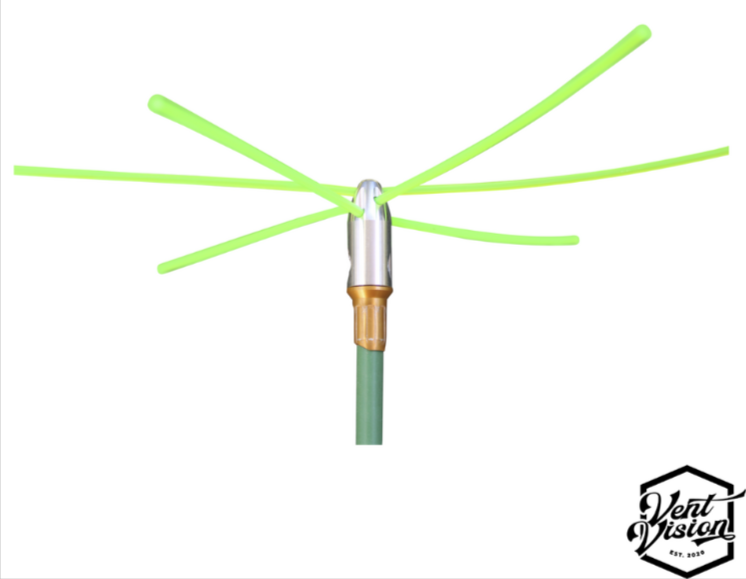

Proper care for dryer vents promotes a safe home environment, making laundry effortless. Clean vents allow warm air to freely move, preventing any undue stress on the dryer. Lint buildups increase heat, bringing down the drying time, creating hidden risks often overlooked by several households.
A consistent level of maintenance safeguards the appliance, reducing energy wastage and encouraging long-lasting efficiency. Furthermore, the process is streamlined with the help of practical tools like the dryer vent cleaning kit.
Warning Signs That Your Dryer Vent Is Getting Clogged
- Slow Drying Cycles
When air is confined in the vent, clothes require more time to dry. Heat finds it difficult to move away, hence fabric remains wet longer than normal.
- Musty Heat Smells
Whenever lint starts accumulating near the internal heat points, warm, musty odors start surfacing. Few homes might even notice stale air near their appliance, and a sanitizing fogger becomes effective after the removal of vent blockage.
- Hot Laundry Room
There is a visible increase in temperature in the laundry zone, which indicates a blocked airflow. Heat loss to the space occurs because the vent cannot effectively expel warm air.
Step-by-Step Guide: How to Prevent Dryer Vent Clogs
Clean vents help in a safer home creation by keeping the appliance safe. Easy techniques lead to consistent air circulation and reduced lint accumulation.
Clean Lint Screen
A lint screen that is well taken care of assists in the circulation of cleaner air and also the smooth running of the dryer. The lint should be removed after every cycle to reduce loose fibers that go more into the vent tube. Washing in mild soap every month removes softener residue, which sticks to the mesh and prevents the flow of air.
This little practice enhances thermal regulation and makes the system effective. A clean screen also avoids unnecessary wear and tear on the dryer drum and internal sensors.
Inspect Vent Hose
The vent hose should be checked frequently since lint easily accumulates in small twists or slopes. The visual inspection reveals crushed spots, which impede airflow and strain the dryer unnecessarily. Manual brushing helps clear the accumulation along the inner walls, while a vacuum attachment scrapes out the concealed debris behind the machine.
Clean hose maintains a constant pressure of air and minimizes the moisture that settles in the duct. This is an easy routine that enhances long-term performance.
Check Outdoor Outlet
The exterior vent outlet should remain open to allow the warm air to escape without any obstruction in the duct. Small debris, lint, and leaves tend to accumulate around the outlet and restrict the airflow.
When the vent flap is seen to move strongly in a drying cycle, it can be confirmed. The hesitation is normally an indication that the duct contains more lint. Sealing the outlet system keeps the ducts dry and helps the air flow well until the opening leading to the outside.
Shorten Vent Path
A reduced vent path enables the movement of warm air to the outside of the building with minimal impediments. High-capacity routes result in the formation of cool pockets within the duct where lint accumulates and clumps up.
It is possible to relocate the dryer or redirect the duct to take a less winding path, minimizing friction and avoiding slack airflow. The enhanced design reduces the load on the heating component and motor. Flat tracks require minimal maintenance and keep the system clear for longer.
Use Metal Ducts
Metal ducts are a more durable and safer mode of venting, since the solid structure maintains its form even during the long drying process. The inner surface is smooth, such that the lint flows out without clinging to it. Thin, flexible plastic ducts are easy to collapse and trap heat.
Metal ducts are used to resist temperature changes and maintain a constant airflow between the machine and the outlet to the outside. Such a duct material enhances long-term reliability and minimizes the time required for cleaning.
See also: Fast & Affordable Laundry Service in 93257 – Fresh & Hassle-Free
How to Know When to Call a Professional
- Repeated Clogs
Recurrent clogging has deeper vent issues that cannot be rectified by simple cleaning. Professional equipment assists in extracting compacted lint from long or complex ducts.
- Strange Odors
Strong odors of heat or light burning are unexpected indicators of overheating in the vent line. Technicians find the source early enough before the big problems arise.
- Weak Airflow
When airflow is low during one of the drying cycles, it indicates that the ducts are crushed or that the interior channels are blocked. A professional inspection will restore proper ventilation and cover the appliance.
Conclusion
When considered habits are used to keep the dryer vent safe and maintain a consistent flow of air during the laundry process, the comfort of the home is enhanced. Simple tasks should be given regularly to enhance performance and reduce unwanted heat accumulation within the machine. Clean vent lines make the dryer run easily and lessen the possibility of problems under the carpet that interfere with the routine. The steady method is a confidence-creating strategy that maintains a stable operation of the laundry area.