
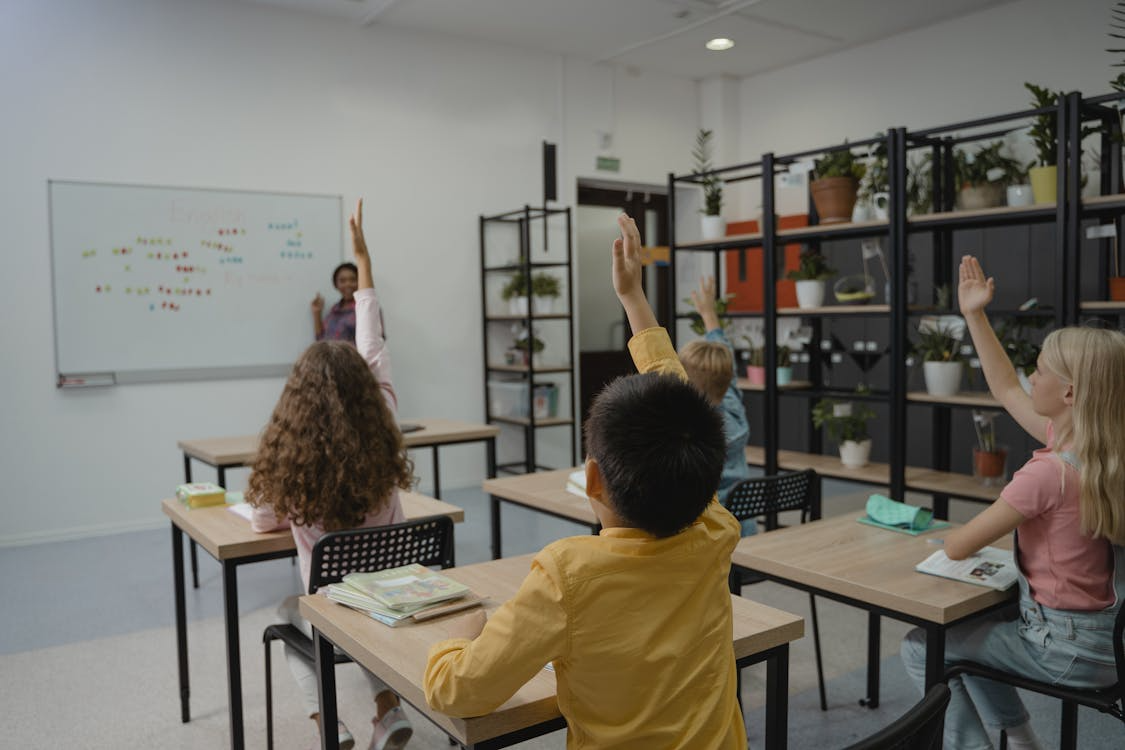

Flexible classrooms are revolutionising learning for kids.
Forget just looks. Schools that have redesigned their classroom space to incorporate flexible, moveable school classroom furniture are seeing results:
Higher engagement. Happier kids. Better learning.
…because…
For the most part, classrooms have stayed the same for over 100 years. Stiff desks. All facing the front. One way of working designed to suit every student. It’s holding education back.
This article includes:
- What Is a Flexible Classroom?
- Why School Classroom Furniture Is More Important Than You Realise
- The Benefits of Flexible Learning Spaces
- Types of Flexible Classroom Furniture
- How To Start Creating Flexible Spaces
What Is a Flexible Classroom?
Flexible classrooms are classrooms which put learning at the centre.
Instead of one rigid layout, flexible classrooms are constantly being adapted and changed to fit the activity students are working on — group projects, individual lessons, full class seminars… you name it.
The design of the room flows around this central idea.
Instead of forcing students to fit a particular way of learning, classroom furniture is arranged to allow students to move, think and learn however they feel is best.
Sourcing from the right educational furniture supplier is the foundation. Modular desks, collaborative tables and easily moved chairs allow schools to build a classroom layout that fits their needs, not the other way around.
The furniture kids learn on isn’t just filling a space. It’s allowing them to think differently about how they learn.
And that’s something special.
Why School Classroom Furniture Is More Important Than You Realise
You might be thinking…
“Furniture doesn’t change how someone learns. People do.”
And… you’d be wrong.
Research proves time and time again that the physical layout of a classroom has a huge impact on the attention students pay to their learning.
Clip onto chairs? Yawn.
Height adjustable desks and furniture that moves? Suddenly students are more focussed, involved and present.
When everything a child uses in a classroom is bolted to the floor it encourages passivity.
Students are seated at rigid desks. They can’t move without distracting others. They’re forced to sit in a way that’s probably not comfortable. That’s how lessons have been done for years… but that doesn’t make it right.
When the furniture in a classroom becomes adaptable, everything changes.
71% of students stated their learning needs were met with flexible seating options and table styles. Before changes were made to the classroom, only 38% of students felt the same way.
That’s almost a ⅓ difference. By simply introducing flexible furniture to a classroom, student engagement almost doubled.
The Benefits of Flexible Learning Spaces
When it comes down to it, there are three main reasons to use flexible classroom furniture.
Students Are More Engaged
Getting kids interested in what they’re learning is a battle.
But did you know that the classroom furniture you select can make a difference?
Researchers found that when students were given the choice to sit at a tall counter-like table they were more engaged.
In fact, 78% of students described themselves as highly engaged while at the tall tables.
Mind = blown.
Because when students have options, they take more ownership of their learning. They feel like they have a voice. That simple fact can transform how attentive they are.
Collaborate Better
Let’s face it, trying to get kids to work together when they’re trapped at rigid desks is… difficult.
But when the furniture in a classroom can be moved, group work becomes a whole lot easier.
Teachers can fluidly change the layout of their classroom to allow for teamwork and collaboration. Students can work together at round tables. They can face each other. They can talk. They can learn how to collaborate — just like they’ll have to do when they leave school.
Some benefits of flexible furniture for collaboration:
- Round tables allow for peer-to-peer support
- Booth seating allows students to focus in small groups
- Modular desks allow for both collaborative learning or individual workspaces
- Height adjustable desks let kids work standing up
Kids Feel Better
It doesn’t stop at academics. Flexible classrooms help kids feel more comfortable.
Less stress = better behaviour. Simple as that.
Students feel more at ease in flexible classrooms. When they’re comfortable, they’re happier. And when they’re happier, they focus better.
Types of Flexible School Classroom Furniture
These are the pieces of classroom furniture every flexible classroom needs.
Modular desks & tables. Tables and desks that connect together, then come apart. They’re perfect for creating collaborative working groups without sacrificing the ability for individual work.
Tiered seating and height adjustable furniture. Tall tables and stools, short benches. Height adjustable chairs. Letting kids work and sit at different heights has been proven to produce different results.
Collaborative tables. Large tables that pupils can work around. Ideally these tables come in a writable surface so students can take notes directly on them.
Mobile seating. Chairs and stools with wheels. When it’s time to get up and move around, everyone can do so effortlessly.
Teachers don’t have to rearrange furniture to accommodate learning activities. Instead, they’ll move it themselves.
Soft seating & reading areas. Bean bags. Floor cushions. Squishy chairs. They might sound childish, but comfort seating allows for students to break away from their desks to read, reflect or work alone.
See also: Quality Installation in Denver: Reducing Workplace Downtime with Strategic Scheduling
How To Start Creating Flexible Spaces
So you’ve read what adaptive classrooms can do for kids. Here’s how to get started.
Understand the classroom’s goals. What does the classroom need to facilitate? Group projects? Individual learning? Lectures?
Figure this out first. The goals of the room should drive design decisions, not the other way around.
Furniture should be able to move. If only one thing can be done, improve the mobility of the classroom. Desks and chairs with wheels are a new best friend.
Create zones. A flexible classroom has several different spaces. One area for group work. Another for focusing. Even learning lounges.
Divide the classroom into different zones to allow for different activities.
Include students. Let kids have a say in how their classroom looks. Students who help decide how their classroom looks take more ownership of it. When kids feel like they have a voice, they listen more.
Let’s Review
There’s a reason why schools worldwide are changing their classrooms to support activity-based learning.
Flexible classrooms are the future of education. They place students at the centre, empower them to learn how they want to learn, and create spaces that encourage collaboration, discussion, and critical thinking.
Flexible furniture is the backbone of these classrooms. Without the right furniture, schools are unable to move beyond stagnant, outdated methods of teaching.
But for those who take the leap? Who invests in their classrooms?
The results speak for themselves.